market outlook

Fundspeak

Market Insight Equity – January 2026 | UTI Mutual Fund

Summary: Entering 2026, equity markets are navigating a complex transition phase marked by elevated long-term interest rates, fiscal dominance in developed markets, and uneven earnings delivery across segments. While headline indices remain near all-time highs, underlying market breadth tells a different story, with meaningful corrections in small-cap stocks and selective pressure even within mid-caps. This divergence reinforces the importance of valuation discipline, asset allocation, and realistic return expectations. India’s macro fundamentals remain comparatively strong, supported by fiscal discipline, structural reforms, and a stable policy framework. However, equity returns are likely to be driven more by earnings delivery and valuation discipline rather than broad-based multiple expansion. In this environment, large caps appear relatively better placed, while value investing—executed with a strong quality and cash-flow lens—offers a more resilient way to navigate volatility. Global and Macroeconomic Drivers Despite aggressive policy rate cuts by major central banks, long-term bond yields have remained elevated. In the US, fiscal expansion and heavy government borrowing have pushed term premiums higher, while inflation remains above target. Japan presents an even starker shift, with bond yields at multi-decade highs, raising concerns around the unwinding of yen carry trades and potential stress in leveraged global positions. The key takeaway is that fiscal policy, not monetary easing, is now the dominant force shaping long-term rates. While US corporate balance sheets remain healthy after years of deleveraging, government finances are increasingly stretched, with interest costs now rivaling defense spending. This backdrop creates a structurally higher cost of capital and limits the scope for sustained valuation expansion in global equities Gold and Household Leverage: Indian households are estimated to hold approximately 35,000 tons of gold, valued at nearly 90% of India’s GDP. Due to recent price appreciation, gold purchased over the last decade is now valued at double the original cost. This asset appreciation is notable, as household debt in India has been climbing consistently (reaching 42% of GDP in December 2024), driven particularly by non-housing retail loans. Gold holdings offer Indian households optionality to delever should they choose to do so AI, Productivity and Growth AI-led capital expenditure has emerged as a major driver of global growth, particularly in the US and parts of Asia. While the short-term impact on employment remains debated, historical data suggests that higher productivity ultimately supports real wage growth at the aggregate level. However, the distribution of benefits may be uneven across sectors and skill sets. From a market perspective, the key uncertainty is not productivity gains but whether AI investments will generate commensurate shareholder returns, a question that remains unresolved. India: Fiscal Discipline and Structural Strength Unlike several developed economies, India has followed a disciplined fiscal path post-pandemic. Fiscal deficits have been steadily reduced from peak levels, and the government has articulated a clear roadmap to bring debt-to-GDP closer to 50% by FY31. Recent income tax and GST cuts have already supported consumption, limiting further room for aggressive stimulus. Going forward, growth support is likely to come more from supply-side reforms—such as labor codes, higher FDI limits, and regulatory simplification—rather than large incremental fiscal spending. These measures may not produce immediate growth spikes but improve India’s long-term growth potential and capital formation. Market Breadth, Earnings, and Valuations While benchmark indices appear resilient, market internals reveal a stealth correction: This divergence reflects earlier valuation excesses, now translating into weaker forward returns. Earnings growth expectations also appear demanding, with FY27 projections near 17% despite nominal GDP growth closer to 10%, making delivery challenging. Valuation indicators suggest: This reinforces the case for moderation in return expectations and a bias toward quality and balance-sheet strength. Asset Allocation and Style Preferences Given the current setup: Value investing, when executed through intrinsic valuation, cash-flow focus, governance discipline, and avoidance of leverage, offers a way to participate without chasing momentum or narratives. Value Investing: Philosophy in Practice The value approach discussed emphasizes: Portfolio construction relies on sector valuation discipline, selective stock picking across market caps, and controlled active risk. Importantly, exits are driven by fundamentals and valuation extremes rather than short-term price movements. Closing View Equity markets in 2026 are unlikely to offer easy, broad-based returns. With valuations only partially corrected and earnings expectations still elevated, the environment favors discipline over aggression. A combination of realistic return expectations, large-cap bias, selective value exposure, and balanced asset allocation appears best suited for navigating this phase Mutual fund investments are subject to market risks. Read all scheme-related documents carefully.

, ,

Market Insight Equity – January 2026 | UTI Mutual Fund Read Post »

Fundspeak

Market Insight Fixed Income| January 2026 | UTI Mutual Fund

Global Landscape: Resilience Amidst Chaos The year 2025 was described as a “year of chaos,” characterized by volatile tariff announcements and a roller coaster ride for equity and growth bond markets. Despite early fears that trade uncertainty would knock growth down, global growth remained resilient due to high fiscal spending by governments worldwide. While manufacturing activity moderated in the US and Eurozone, it was offset by strong activity in China, Korea, and Taiwan, largely driven by massive investments in Artificial Intelligence (AI) and semiconductor sectorsThe US Federal Reserve cut rates to the 3.50%–3.75% range as expected but signaled that future cuts would be limited, with dot plots indicating only one rate cut ahead in 2026. Consequently, bond yields have risen across major economies (excluding Indonesia), driven by strong growth expectations and fiscal deficits rather than aggressive monetary easing Domestic Developments Agriculture and Credit Trends On the domestic front, the agricultural outlook is positive with Rabi sowing progressing well; wheat acreage is at 107% and oilseeds at 111% of normal levels, supported by healthy reservoir buffers. While central government receipts have declined due to tax cuts and slower nominal GDP growth, the government is expected to meet its fiscal deficit targets through expenditure rationalization and scheme reorientation A critical trend for the banking sector is that credit growth (11.8%) continues to outpace deposit growth (9.4%). To bridge this gap, banks are aggressively issuing Certificates of Deposit (CDs), which has pushed one-year CD rates to approximately 6.9% Outlook: The End of the Rate Cut Cycle UTI Mutual Fund suggests that the best of the monetary easing cycle is behind us, and the RBI is likely to keep rates “lower for longer” to support growth rather than cutting aggressively. The Indian Rupee (INR) is expected to remain range-bound between 89.50 and 91.00 in the near term, as it is viewed as attractively valued relative to other currencies. A notable shift is occurring at the long end of the yield curve, which has underperformed due to reduced demand from pension funds and insurance companies as they shift asset allocations toward equities Investment Strategy for 2026 1. Hybrid Funds: Attractive due to positive carry available in the fixed income component and the benefit of automatic rebalancing.2. Financials: The sector is well-positioned to benefit from the resumption of credit growth and the inherent leverage that allows earnings to grow faster than credit growth, helping lift nominal growth.3. Large Caps: Preferred for lumpsum allocations due to more comfortable valuations Focus on UTI Small Cap Fund For investors navigating this environment, UTI recommends the following strategies based on investment horizons: • 1 Year+ Horizon: Investors should focus on the short end of the yield curve (1 to 3 years) through short-term or corporate bond funds, as this segment offers attractive opportunities due to the steepness of the curve. • 2 Years+ Horizon: Investors are advised to consider income plus arbitrage funds, which may offer better tax-efficient returns. • Tactical View: Investors should remain cautious on long-duration funds given the supply-demand dynamics and the conclusion of the rate cut cycle

, ,

Market Insight Fixed Income| January 2026 | UTI Mutual Fund Read Post »

Fundspeak

Market Insight Equity| December 2025 | UTI Mutual Fund

Summary: This summary draws from the “Market Insight Equity – December 2025” webinar, featuring Vetri Subramanya (MD and CEO Designate) and Nathan Jain (Fund Manager, UTI Small Cap Fund and UTI Innovation Fund), covering global dynamics, market valuations, and the strategy of the UTI Small Cap Fund. Global and Macroeconomic Drivers China’s Export Powerhouse and Pricing Pressure: China reported exports exceeding $1 trillion in the first 11 months of 2025, a figure higher than the GDP of most countries. Export growth remains strong, particularly accelerating towards the EU and ASEAN countries, despite tariff discussions with the US. This dominance stems partially from extensive state incentives (subsidies, tax concessions, below-market cost borrowings), which have led to massive industrial overcapacity—for instance, China’s solar module capacity is 150% of global demand. This overcapacity causes weak pricing trends globally. Interestingly, China’s economically active population has been shrinking for nearly a decade, yet export production continues to rise, often shifting to automation and high-tech sectors, resulting in constrained wage growth Currencies and Competitiveness: The US Dollar has been depreciating, while the Indian Rupee (INR) touched an all-time low of 90 per USD. While a strong exporter, the Chinese Yuan has weakened against most global currencies, further feeding its export advantage. However, the Yuan has appreciated against the INR, which improves India’s competitive position relative to China Gold and Household Leverage: Indian households are estimated to hold approximately 35,000 tons of gold, valued at nearly 90% of India’s GDP. Due to recent price appreciation, gold purchased over the last decade is now valued at double the original cost. This asset appreciation is notable, as household debt in India has been climbing consistently (reaching 42% of GDP in December 2024), driven particularly by non-housing retail loans. Gold holdings offer Indian households optionality to delever should they choose to do so Market Valuations and Allocation Strategy Inflation and Interest Rates: Inflation in India is contained, with core inflation running around 4%. This comfort has allowed the Monetary Policy Committee (MPC) to cut rates and the RBI to provide liquidity infusions Valuation Disparity: Aggregate market capitalisation is currently 68% Large Cap, 22% Mid Cap, and 10% Small Cap. Small and Midcaps have increased their weightage, partly due to new listings and partly due to trading at richer valuations relative to Large Caps. Over the last year, the Nifty50 has returned +6%, while the Nifty Small Cap Index returned -12% Equity Allocation Index Comfort: Based on P/B, Dividend Yield, P/E, and P/E to Bond Yield, the Nifty50 is currently in the fair value zone, positioned at the lower end. However, Midcaps are in the absolute expensive territory, and Small Caps are in the expensive zone relative to their own history Key Risks and Opportunities: The primary risks identified are the low nominal GDP growth (sub 10%) making the consensus corporate earnings growth estimate of 16-17% for FY27 look like a “very high bar,” and the elevated valuations in the small and midcap segments Opportunities are seen in: 1. Hybrid Funds: Attractive due to positive carry available in the fixed income component and the benefit of automatic rebalancing.2. Financials: The sector is well-positioned to benefit from the resumption of credit growth and the inherent leverage that allows earnings to grow faster than credit growth, helping lift nominal growth.3. Large Caps: Preferred for lumpsum allocations due to more comfortable valuations Focus on UTI Small Cap Fund The Small Cap Value Proposition and Risk: The Small Cap universe provides exposure to segments unavailable in Large Cap or Mid Cap indices and has historically produced the largest number of multibagger stocks. However, this segment carries high risks; analysis shows that over a recent 10-year period, 162 out of 750 small cap companies saw value destruction exceeding 50%. Small caps also receive less analyst coverage and institutional ownership, requiring greater due diligence. Investment Strategy and Positioning: The UTI Small Cap Fund employs a rigorous filtering process, specifically avoiding companies with: value-destroying business models, balance sheet risks (high debt), and poor corporate governance records. The fund focuses on quality and growth, identifying four categories of investment: Category Leaders (e.g., MCX), Challengers (growing faster than large competitors), Specialty Pure Plays (operating in high-growth subsegments), and Opportunistic Stocks (value, cyclicals, or strategic change plays). The fund remains true to label, with 83% exposure to small cap and 17% to midcap stocks. Its quality and growth focus is reflected in a higher Return on Equity and a higher P/E ratio (45x) compared to the benchmark (41x)

, ,

Market Insight Equity| December 2025 | UTI Mutual Fund Read Post »

Fundspeak

Kotak Gold & Silver Passive Fund of Fund (FOF) by Mr Nilesh Shah

Summary: Global easing trends, rising central bank gold demand, and industrial recovery in silver create a favorable setup for precious metals. The Kotak Gold & Silver Passive FOF offers a rule-based, momentum-driven allocation between gold and silver, providing diversification, liquidity, and disciplined exposure to both defensive and cyclical metal themes. Global Domestic Economy Investment Outlook Risks Opportunities Policy Watch (Near Term) Key Takeaway With global easing, rising industrial silver use, and low cross-correlation, the Kotak Gold & Silver Passive FOF offers a balanced, data-driven route to precious metals.Ideal for investors seeking diversification, systematic allocation, and medium-term carry with long-term optionality.

, , ,

Kotak Gold & Silver Passive Fund of Fund (FOF) by Mr Nilesh Shah Read Post »

Fundspeak

MARKET OUTLOOK & UPDATE ON BUSINESS CYLES FUND BY HSBC

Earnings Outlook Valuation Landscape Flows and Macro Startup Business Cycle Fund Positioning Consumption: Boost from GST cuts, pay hikes, tax relief.👉 Dynamic top-down + bottom-up approach; higher mid/small-cap tilt. Risks Key Rakeaways

, ,

MARKET OUTLOOK & UPDATE ON BUSINESS CYLES FUND BY HSBC Read Post »

Fundspeak

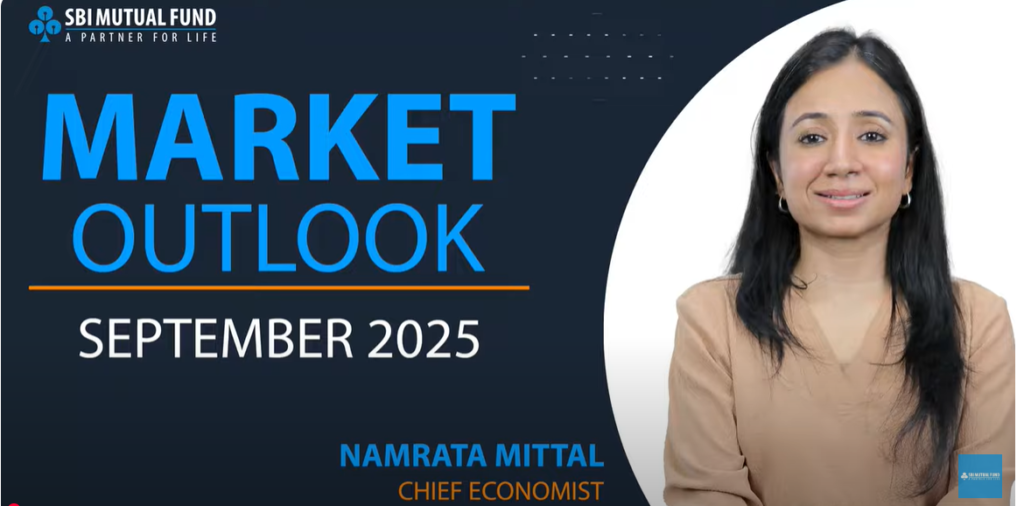
Sep 25 Market Outlook – Expert Analysis by Namrata Mittal, SBI MF

Summary: India faces near-term growth pressure from tariffs, currency weakness, and fiscal strain, but GST reform promises medium-term consumption support. We remain neutral on equities with a defensive tilt, and in fixed income prefer short-tenor high-grade bonds over the pressured long end Global US tariffs on Indian exports add headwinds, particularly for labor-intensive sectors like textiles, jewellery, and food. While global equities surged, and the dollar outlook softens, India lagged peers on equity and currency performance Domestic Economy The government has proposed GST rationalization into three slabs (5%, 18%, and 40%). This could simplify taxes, improve compliance, and benefit MSMEs and consumers, especially in FMCG, electronics, and affordable housing. Still, subdued nominal GDP growth, export softness, and INR depreciation highlight near-term stress. Fiscal pressures are building, but manageable with lower oil prices and short-term financing Earnings growth and valuations Equity valuations are near long-term averages vis a vis bond yields , defensives like consumer and healthcare outperformed. Bond markets saw 10Y yields rise despite benign inflation, due to heavy state loan supply and lack of RBI intervention despite benign inflation, surplus liquidity and sovereign rating upgrade Risks Persistent US tariffs, weaker tax collections, INR underperformance, and long-end bond oversupply could weigh on growth and investor sentiment Opportunities In equities, we favor a defensive stance with quality as a preferred style. In fixed income, short-tenor high-grade bonds and selective credits offer attractive spreads and accrual.   India faces near-term growth pressure from tariffs, currency weakness, and fiscal strain, but GST reform promises medium-term consumption support. We remain neutral on equities with a defensive tilt, and in fixed income prefer short-tenor high-grade bonds over the pressured long end

, , ,

Sep 25 Market Outlook – Expert Analysis by Namrata Mittal, SBI MF Read Post »

Fundspeak

Netra: Early signals through charts – by Sahil Kapoor, Head of products and market strategist, DSP Mutual fund, Sep 2024

Sahil Kapoor, Head of products, DSP Mutual fund, discusses market euphoria, India’s growth drivers, and potential investment opportunities.

, ,

Netra: Early signals through charts – by Sahil Kapoor, Head of products and market strategist, DSP Mutual fund, Sep 2024 Read Post »

Fundspeak

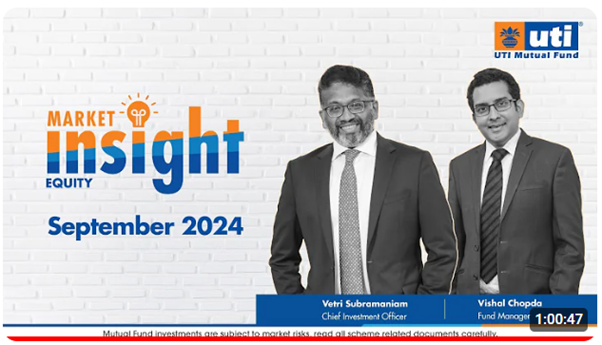
Market Insight Equities – by Vetri Subramaniam, CIO and Vishal Chopda, fund manager, UTI focussed fund, release date 10th Sept 2024

Vetri Subramaniam, CIO, UTI Mutual fund, presents key macro trends, equity valuations, and investment strategies. Vishal Chopda, fund manager, UTI focussed fund, presents the fund’s investment strategy.

, ,

Market Insight Equities – by Vetri Subramaniam, CIO and Vishal Chopda, fund manager, UTI focussed fund, release date 10th Sept 2024 Read Post »

Fundspeak

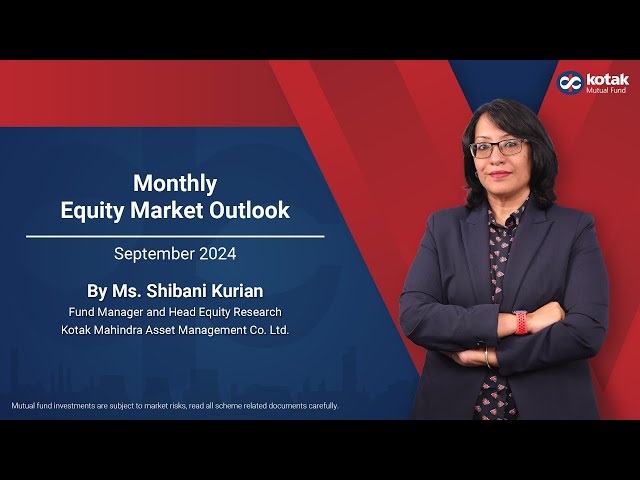
Equity Outlook for September 2024 with Ms. Shibani Kurian

Ms. Shibani Kurian discusses the strong Indian equity market outlook for September 2024, citing macro strength, earnings growth, and sector opportunities.

,

Equity Outlook for September 2024 with Ms. Shibani Kurian Read Post »

Fundspeak

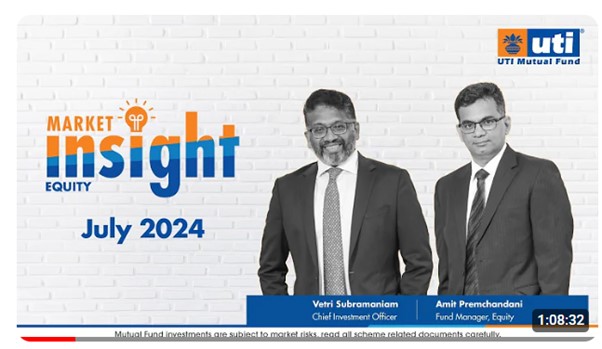
Market Insight Equities – by Vetri Subramaniam, CIO and Amit Premchandani, fund manager, UTI value fund, release date 10th July 2024

Vetri Subramaniam, CIO provides his insight into the current economic scenario and investment outlook. Amit Premchandani, fund manager, UTI value fund, presents the fund’s investment strategy, and the sectoral movements over the last six months driven by the strategy and the valuations.

, ,

Market Insight Equities – by Vetri Subramaniam, CIO and Amit Premchandani, fund manager, UTI value fund, release date 10th July 2024 Read Post »

Fundspeak

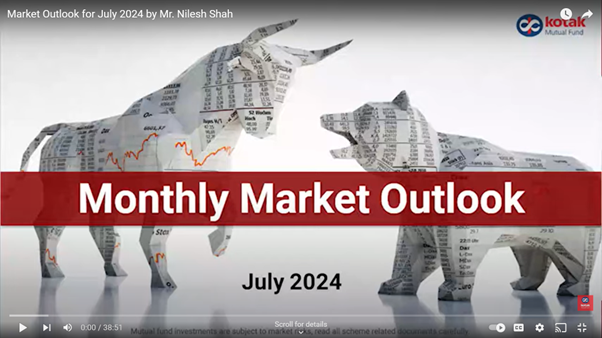
Market Outlook for July 2024 by Nilesh Shah – release date 11/07/2024

Market outlook in July 2024 remains almost unchanged from last month as Global economic dynamics shifts to protectionism, inflation tapers, and India’s growth outlook remains robust amid geopolitical tensions. Nilesh highlights the opportunities in Indian Markets, particularly Consumer and banking sectors as well as long duration debt and gold investments.

, ,

Market Outlook for July 2024 by Nilesh Shah – release date 11/07/2024 Read Post »

Fundspeak

Debt Market Oulook June 2024 by Dhawal, Edelweiss Mutual fund – released 24th june 2024

Summary Debt market outlook for June 2024 is positive due to various triggers like government support, RBI surplus transfer, improved ratings, and economic growth. Key insights

, , ,

Debt Market Oulook June 2024 by Dhawal, Edelweiss Mutual fund – released 24th june 2024 Read Post »

Fundspeak

EquityMarket Outlook June 2024 By Trideep Bhattacharya, Edelweiss Mutual fund – released on 24th June 2024

Summary Nifty50 index saw 14% YoY earnings growth in March quarter fi 24. Industrials and capital goods sectors up, while consumer stocks down. Expect transitions in 2024 with manufacturing sectors leading. Key Insights

, , ,

EquityMarket Outlook June 2024 By Trideep Bhattacharya, Edelweiss Mutual fund – released on 24th June 2024 Read Post »

Fundspeak

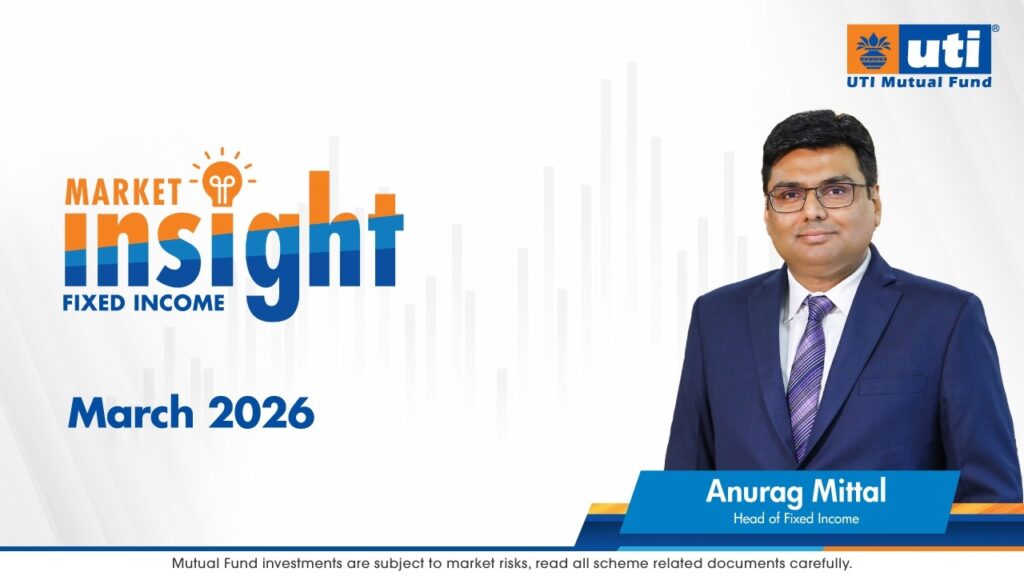
Market Outlook Fixed Income – Anurag Mittal, UTI Mutual fund, release date 11th June 2024

Anurag Mittal discusses his views and insights on the fixed income market, which include the outcomes of the June MPC meeting, GDP growth forecasts, bond markets, and inflation dynamics.

, , , , , ,

Market Outlook Fixed Income – Anurag Mittal, UTI Mutual fund, release date 11th June 2024 Read Post »